Uber exits the Nigerian market: What does this mean for Nigerian event-goers?
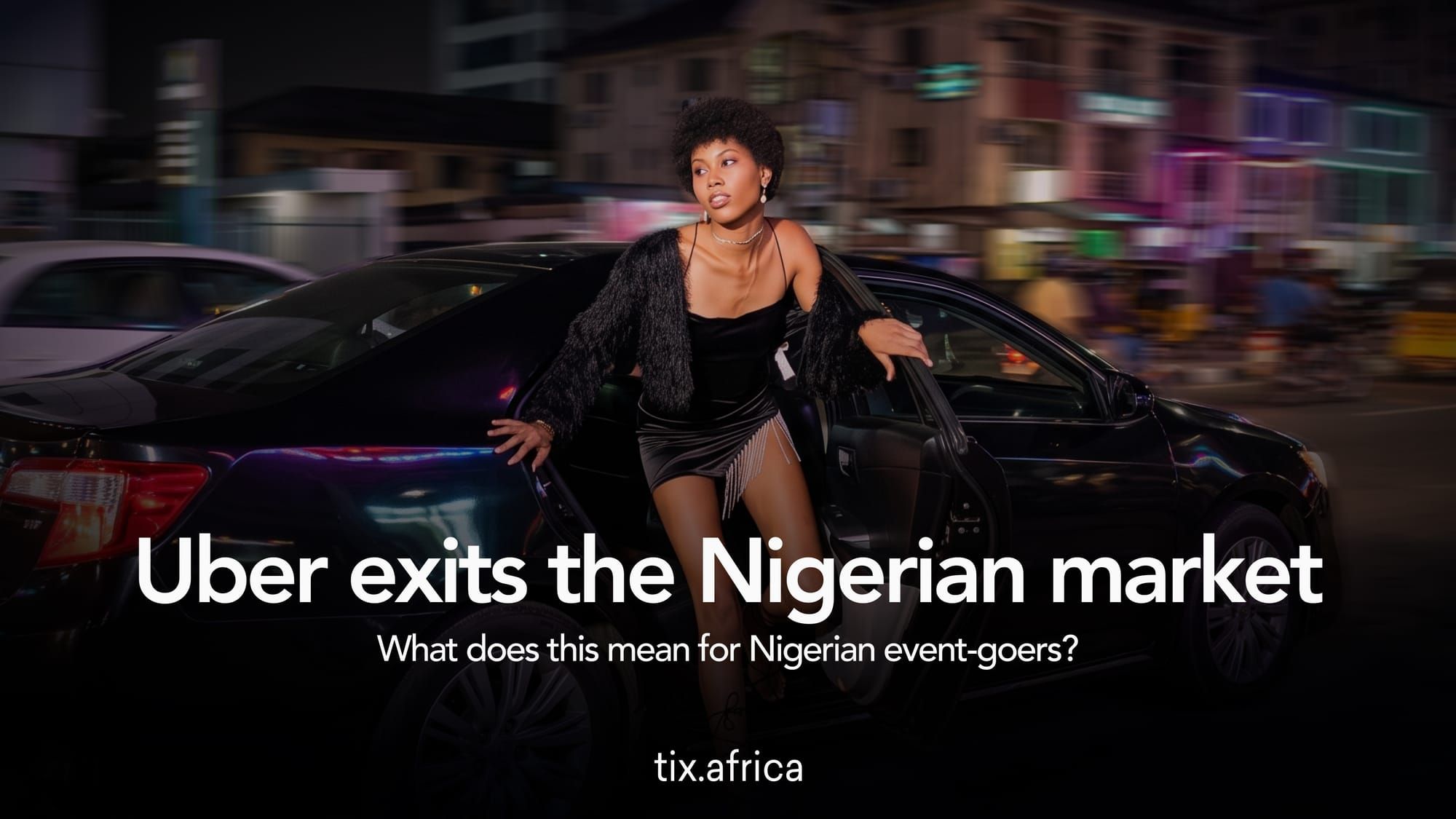
Uber arrived in Lagos in July 2014, at a time when getting around the city was still largely defined by roadside taxis, personal drivers and the uncertainty of finding a reliable ride. Its proposition was simple: open the app, see your driver, know your destination and get there without having to negotiate the journey yourself. By July 2016, Uber reported that it had already completed more than one million trips in Lagos alone.
Over the next twelve years, that convenience became part of how Nigerians moved through their cities and experienced culture. A ride to the airport became easier. A late-night journey home became more predictable. Attending an event across town became less of a logistical negotiation and going somewhere unfamiliar became more accessible.
That last part matters more than it appears.

In 2025, The Tix Index records that Lagos alone accounted for 68% of all events listed on Tix, while 58% of all Lagos events between 2023 and 2025 took place in Eti-Osa. This LGA, that is home to Victoria Island, Ikoyi and Lekki have effectively become one connected events corridor, bringing together venues, hospitality, nightlife, audiences and transportation. The event, therefore, does not begin at the venue. It begins much earlier, when someone decides whether the journey is worth making.
Uber's departure creates a new question for event organisers: what happens when getting to the event becomes part of the barrier to attending it?
The first response will likely come from the existing ride-hailing market. Bolt and inDrive have an obvious opportunity to absorb some of the demand Uber leaves behind. The more interesting possibility, however, is that Uber's exit accelerates a different model of event mobility altogether.

If individual rides become more expensive, less available or less predictable, transportation may need to become part of event design itself.
Organisers could begin negotiating dedicated shuttle routes from major neighbourhoods, establishing designated pick-up and drop-off points, or partnering with shared mobility companies such as Shuttlers. For larger concerts, festivals and destination experiences, transportation could even be bundled into the ticket, turning the journey from an attendee's problem into part of the experience the organiser is responsible for delivering.
That would represent a meaningful shift for Nigerian organisers: from selling access to an event to designing the entire journey around the event.
The timing of the exit makes this particularly significant with Detty December fast approaching. Every December, Nigerians living outside Lagos descend on the city to experience what has become one of the country's biggest cultural moments of the year. The Tix Index shows that December accounted for 50% of all events hosted in Q4 across the three years studied, spanning far more than concerts and parties to include hiking, poetry, community, etc.

The question is not whether people will stop going out. Nigerians have demonstrated repeatedly that they will find a way to have a good time. The more interesting question is where they will choose to go, how much they will be willing to spend to get there, and who will make the journey easier.
This is where Uber's exit could have an unexpected effect on the geography of fun.
The Tix Index already shows a market beginning to expand beyond Lagos, with Oyo and Ogun emerging as secondary event destinations and the growth of rave culture creating new reasons to travel outside the traditional Lagos circuit.
However, Uber leaving will not suddenly decentralise Nigerian nightlife. Lagos still has the venues, spending power, hospitality infrastructure, cultural relevance and audience density that make it difficult to replace. It could, however, force organisers to think more deliberately about cost and proximity. If getting across Lagos becomes more expensive, will audiences begin to favour experiences closer to home? Will organisers move events into neighbourhoods where their audiences already live? Will lower transportation costs make cities such as Ibadan, Abuja and Port Harcourt more attractive for events that previously felt compelled to happen in Lagos?
Perhaps the next generation of events will be designed around neighbourhoods rather than destinations. Perhaps organisers will take experiences closer to their audiences. Perhaps the biggest opportunity will belong to mobility companies that can make moving groups of people cheaper and easier than moving them one by one.
The market will decide which of these possibilities becomes reality.
For now, one thing is clear: when the cost and convenience of movement changes, so will the way people experience a city. But, wherever Nigerians choose to go, Tix will always help them find what is worth experiencing.